One of the most important parameters that are monitored in industrial operations is pressure. In factories and power plants, as well as pharmaceutical plants and oil refineries, proper pressure measurement guarantees the efficiency of the processes, equipment safety, and the quality of products. But the accuracy of pressure instruments may slowly decrease with constant use, environmental conditions, and mechanical wear. It is critical to ensure that it is calibrated regularly. An industry standard solution to validating and adjusting pressure-measuring devices, a Pressure Calibrator can assist organisations in keeping their operations reliable and within the boundaries of quality standards.
This guide defines the operation of pressure calibration, the various types of available calibration equipment, the features to consider as a critical item and the industrial uses that have made pressure calibration a critical component of any modern maintenance program.
What is a Pressure Calibrator?
A pressure calibrator is a highly accurate device to produce, measure, and check pressure values to test pressure gauges, transmitters, sensors, switches, and other pressure measuring instruments. It is used to compare the reading of a test instrument to a known reference standard of that instrument to see whether the instrument is functioning within its specified accuracy.
Calibration enhances the reliability of measurements, reduces errors during production and facilitates in adhering to international quality standards like ISO 9001 and ISO/IEC 17025.
Why Pressure Calibration is Important
Temperature, vibration, contamination, and continuous operating loads are susceptible to pressure instruments. These factors would lead to calibration drift with time and false readings.
Routine Pressure Measurement Calibration offers a number of benefits:
- Enhances accuracy and consistency of processes.
- Improves the safety of the workplace and equipment.
- Prevents costly production interruptions.
- Promotes regulatory and quality compliance.
- Increases the life of pressure instruments.
- Lowers the cost of maintenance by early fault detection.
Calibration of instruments helps in keeping the important industrial processes going safely and effectively.
Types of Pressure Calibration Equipment
The choice of Pressure Calibration Equipment to use is determined by the application, accuracy required and the range of working pressure.
Digital Pressure Calibrator
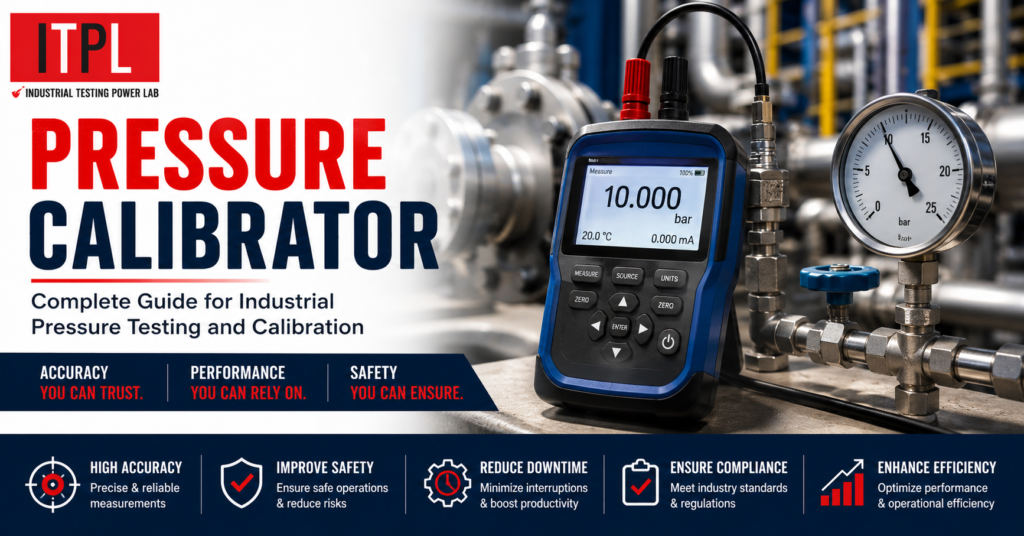
One of the most common calibration instruments is a Digital Pressure Calibrator since it is both precise and convenient to use. It includes a digital screen, automatic measurements, and high-resolution sensors used to check the pressure accuracy.
Common features include:
- Multi-unit pressure measurement
- Automatic zero adjustment
- Data logging capability
- USB and wireless connectivity
- Calibration report generation
These are the best tools to use in the field, laboratories and production plants.
Hydraulic Pressure Calibrators
Hydraulic calibrators take oil as the pressure media and they are meant to be applied in high pressure situations. They are very stable and are widely applicable in heavy industries and calibration laboratories.
Pneumatic Pressure Calibrators
Pneumatic systems create pressure with either air or gas, so they can be used in applications that need low pressure where cleanliness and accuracy are a concern.
Pressure Gauge Calibration Process
Pressure Gauge Calibration is the comparison of a pressure gauge with a certified reference instrument under controlled pressure conditions.
An average calibration procedure consists of:
- Checking the instrument to see if it has been damaged.
- Connecting it to the calibration system.
- Providing pressure at various points of the test.
- Comparison of readings with the standard of reference.
- Recording measurement deviations.
- When needed, fine-tuning the instrument.
- Granting a calibration certificate.
After a regular calibration process, the measurement results are precise and traceable.
Applications in Industrial Pressure Testing
Industrial Pressure Testing: Reliable Industrial Pressure Testing is necessary in industries where pressure has a direct impact on the functioning performance and safety.
Manufacturing
Pressure calibration is used in production facilities to ensure the precision of the hydraulic systems, pneumatic equipment, and automated machinery.
Oil and Gas
Pipelines, compressors, valves and storage are all monitored by pressure instruments. Calibration ensures frequent leakage, failure, and safety risks are avoided.
Power Generation
The boilers, turbines, steam systems, and cooling circuits in power plants are controlled by calibrated pressure devices to ensure smooth running.
Pharmaceutical Industry
Proper monitoring of pressure facilitates sterile production, quality control and conformity to regulation.
Food and Beverage Processing
The control of pressure is also essential in the sterilization process, package, and the automation of processes to maintain uniform product quality.
Key Features to Look for in a Pressure Calibrator
In choosing a calibration solution, keep in mind the following characteristics:
High Measurement Accuracy
Select equipment with the ability to provide consistent, repeatable, and traceable measurements.
Wide Pressure Range
The calibrator has a wide operating range that enables it to be applicable to various industrial applications.
Rugged Construction
The industrial setting necessitates the use of robust machinery that can endure vibrations, dust, and harsh working conditions.
Easy-to-Use Interface
Bright digital screens and user-friendly controls enhance the performance of technicians and minimise mistakes in operations.
Connectivity and Data Management
Contemporary calibration systems are cloud connected, report automatically and are easily integrated into software to enhance documentation and audit preparedness.
Emerging Trends in Pressure Calibration
The technology of pressure calibration is also developing in connection with Industry 4.0 and smart manufacturing.
Current innovations include:
- Cloud-based calibration management
- Wireless pressure monitoring
- Automated calibration workflows
- Digital calibration certificates
- Industrial IoT integration
- Predictive maintenance analytics
- Remote diagnostic capabilities
These technologies assist organisations in gaining efficiency, reducing manual work, and ensuring that equipment is reliable at all times.
Best Practices for Accurate Pressure Calibration
Organisations must adhere to set calibration practices to obtain dependable results:
- Apply certified standards of reference.
- Maintain clean calibration equipment.
- Calibrate at regular intervals.
- Record and store calibration.
- Train technicians in best practices.
- Confirm calibration of environmental conditions.
Adhering to these practices enhances confidence in measurements and long-term operational excellence.
Frequently Asked Questions
Q1. What is the use of a pressure calibrator?
Ans: It is applied to check and correct the precision of the pressure gauges, transmitters, sensors and other pressure measurement devices.
Q2. What is the frequency of calibration of pressure instruments?
Ans: The choice of calibration frequency is based on the equipment use, operating conditions and industry requirements. A lot of organizations conduct yearly or periodic calibration.
Q3. What is the advantage of a digital pressure calibrator?
Ans: Digital calibrators are more accurate, quick in measurement, record data automatically and reporting calibration is simpler.
Q4. Why is pressure calibration important?
Ans: Calibration of pressure is used to verify accuracy, enhance the safety of the process, minimize equipment breakdowns and ensure compliance with regulations.
Q5. What industries need pressure calibration?
Ans: The manufacturing, oil and gas, pharmaceutical, food processing, power generation, chemical processing, and laboratory industries are among others that depend on precise calibration of pressure.
Conclusion
To ensure safe, efficient, and compliant industrial activities, proper pressure measurement is critical. A Pressure Calibrator assists organisations in checking and confirming the accuracy of the instruments, enhancing the reliability of the process, and minimising expensive downtime by following a regular calibration routine.
Modern pressure calibration solutions deliver the accuracy demanded by current demanding applications, whether in manufacturing plants, laboratories, energy facilities or process industries. Through high-tech digital solutions and regular calibration and maintenance, companies can enhance efficiency, reinforce quality control, and guarantee successful operation in the medium and long term.