Precision is the ultimate currency in the contemporary industrial environment, where even a degree fraction may affect the safety of a power plant or the chemical purity of a potentially life-saving drug. The thermal monitoring technologies have multiple technologies used; one of which, the Resistance Temperature Detector (RTD), is considered to be the most precise and consistent industrial temperature detector. RTDs are needed to ensure excellence, from a PT100 sensor in a laboratory to a PT1000 temperature probe in a remote weather station.
This codified guide goes in-depth into the RTD working principle, delves into the many different types of sensors, and the importance of resistance temperature detector calibration in ensuring the ISO 17025 and ITS-90 temperature standards.
What is a Resistance Temperature Detector?
A Resistance Temperature Detector is a high precision temperature sensor that works by measuring the variation in the electrical resistance of a metal as it heats up. An RTD is a variable resistor as opposed to thermocouples that produces a small voltage.
Platinum RTD elements are used in most industrial RTDs since platinum is a chemically inert material and is generally highly stable, and has a linear correlation between impedance and temperature. Although other metals, such as copper or nickel, are sometimes also used, the most preferred choice in the industrial temperature monitoring system is the platinum sensors (like the industry Pt standard PT100) as they are durable and also precise.
Basic RTD features include:
- Much Precision: RTDs are more precise and can be located at least to within ± 0.1 o C.
- Long-Term Stability: They are characterized by the fact that their reading oes not change significantly over the years of service.
Repeatability RTDs are repeatable even following repeated thermal cycling.
The RTD Working Principle: Physics of Precision
The principle of RTD working is focused on the positive tempering coefficient (PTC) of metals. The higher the temperature of a metal, the higher the thermal agitation of the atoms. This complicates the flow of electrons through the material, virtually enhancing electrical resistance.
In order to convert this resistance into temperature, the industry uses the CallendarVanDusen equation. This mathematical formula is the relationship between resistance and temperature, which enables a transmitter or controller to display an accurate temperature value using the ohms that are measured.
Lead Wire Configurations: Eliminating Error
As RTD measures the resistance, the wire between the sensor and the controller may contribute to parasitic resistance and result in inaccurate measurements. There are three principal wiring arrangements which can be used to solve this:
- 2 Wire RTD: The easiest design, though one that is not able to consider the resistance of the lead wires. It can only be used in short courses where one does not need accuracy.
- 3 Wire RTD: This is the most typical way of process industry. It is the one that measures and subtracts the resistance of the leads using a third wire so as to provide a more accurate reading.
- 4 Wire RTD: This is mostly applied in temperature measurement in the laboratory. The combination of such a design would eliminate any lead wire resistance, which would give the maximum accuracy possible.
Types of Resistance Temperature Detectors
Your application requires a particular RTD construction depending on the mechanical stress and temperature range of your application:
1. Wire-Wound RTD
They are made of a fine platinum wire, wrapped around an inner core of ceramics or glass, and covered by a coating. They provide the greatest degree of accuracy and are suited to NABL-accredited calibration systems where the main objective is to achieve accuracy.
2. Thin Film RTD
Thin-film sensors are produced by plating a platinum coating of one micrometer on a ceramic substrate. They are very small, shockproof, and affordable. These incumbent sensors are the most popular in industrial temperature controllers.
3. Coiled Element RTD
They are characterized by a coil of wire that is least supported and it is able to stretch and shrink freely when the temperature is extreme. The design has a high vibration resistance in severe offshore or aerospace operations.
RTD vs. Thermocouple: The Critical Comparison
The most popular question in industrial metrology systems is: Which is better, RTD or Thermocouple?
| Feature | RTD Temperature Sensor | Thermocouple |
| Accuracy | Higher (within ± 0.01°C to± 0.1°C) | Moderate (within ± 0.5°C to ± 2°C) |
| Stability | Excellent (minimal drift over time) | Fair (drifts due to wire oxidation) |
| Temperature Range | Moderate (-200°C to +600°C) | High (-200°C to +2000°C) |
| Linearity | Excellent | Non-linear (requires correction) |
| Response Time | Slower (due to thermal mass) | Very Fast |
The Verdict: In high-precision, long-term applications with temperatures below 600°C, the RTD will be a better choice.
Resistance Temperature Detector Calibration
Even the most steadfast high-accuracy temperature sensor will ultimately suffer the phenomenon of drift through mechanical impact or extreme thermal cycling. The required procedure is known as resistance temperature detector calibration, which is compared to a certified reference thermometer calibration standard.
The Importance of Calibration Compliance
Calibration to be in compliance with the ISO 17025 calibration standards and ITS-90 temperature standards, make sure that your sensors are compliant. In the case of a NABL-accredited calibration setup, traceability is essential. A difference of only 0.5°C between sensors would destroy one lot of pharmaceutical or cause a turbine to burn the wrong fuel-to-air ratio.
RTD Calibration equipment used:
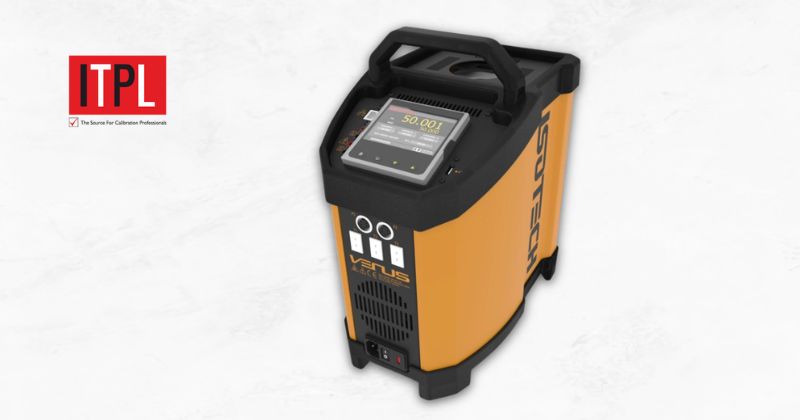
- Dry Block Calibrator: This is a portable and clean method of on-site calibration of RTDs in a factory.
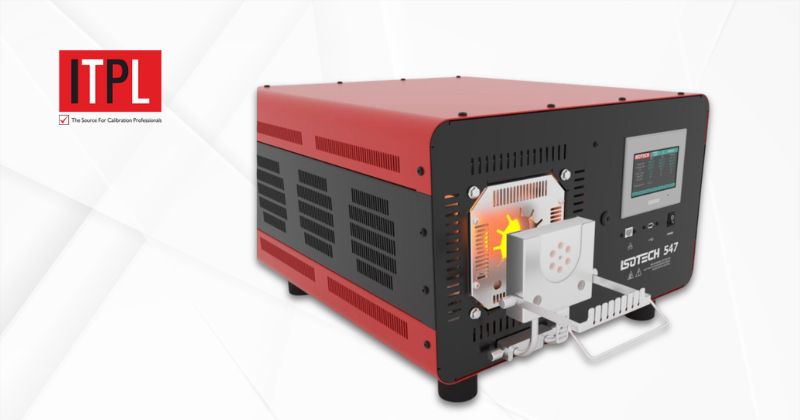
- Temperature Calibration Furnace: Required when testing RTDs to their upper limit (around 500°C to 600°C).
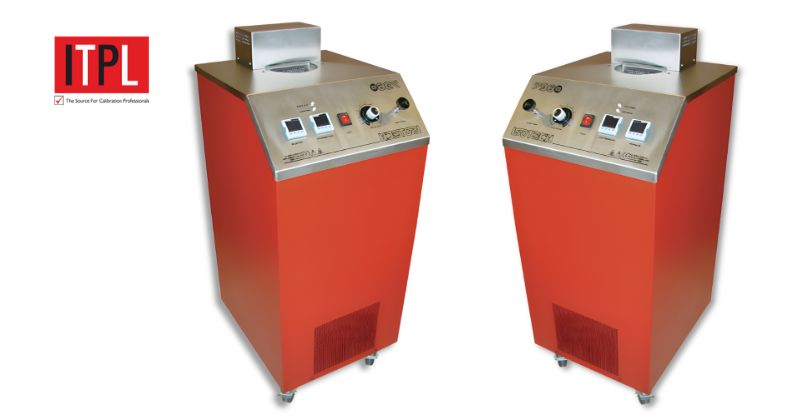
- Calibration Baths: Stirred liquid baths provide the most thermal stability for laboratory-grade validation.
Industrial Applications of RTD Sensors
The flexibility of the RTD is required in a number of critical industries:
- Power Plant Temperature Monitoring: This is used to check bearing temperatures on huge generators and the temperature of cooling water systems.
- Oil and Gas Instrumentation: It is important in custody transfer, when it is necessary to determine the exact temperature, which can be used to determine the volume of the transferred oil or gas.
- Pharmaceutical Temperature Validation: Application in autoclaves and bioreactors, where it is a regulatory demand that drugs be kept at a precise temperature to ensure drug safety.
- Aerospace Temperature Testing: Authentication of the thermal characteristics of the aircraft sections and the environmental control apparatuses.
Frequently Asked Questions
Q1. What is the difference between the PT100 and PT1000?
Ans: A PT100 sensor has a resistance of 100 ohms at 0°C, and a PT1000 temperature probe has a resistance of 1000 ohms. In battery-operated systems, PT1000 sensors are frequently used due to the increased resistance to enable the use of reduced current.
Q2. Why is platinum used in RTDs?
Ans: The metal of preference is platinum since it offers a very stable, repeatable, and close linear relationship of resistance vs temperature over a wide range.
Q3. What is the frequency of RTD calibration?
Ans: Although the environment influences it, the overall standard of industrial temperature sensors is that they should be recalibrated on an annual basis to ensure ISO 17025 conformity.
Q4. Can I use an RTD at 1000°C?
Ans: Generally, no. The majority of platinum RTDs have a limit of 600°C. In addition to this, the metal may also get contaminated, and a thermocouple is also advised.
Q5. Can a 3-wire RTD be accurate in the industrial environment?
Ans: The RTD 3-wire is, of course, the standard. It is a great compromise between cost and accuracy in that it balances the lead wire resistance.
Conclusion
A Resistance Temperature Detector is probably the best device that one can have in case he needs high accuracy temperature data. It is the sensor of choice in the highly demanding industries of the world because of its stability, repeatability, and accuracy. Nonetheless, the equipment is just half of the war; it is important that accuracy is maintained through strict adherence to the calibration of the resistance temperature detectors.
In ITPL India, we offer the global state-of-the-art RTD calibration system and industry metrology products that are required to ensure that your business continues to operate at full capacity. With our sophisticated temperature sensor calibration systems, you are guaranteed a safe, efficient, and very global standards facility.
To increase the accuracy of your process, using an ISO-conformant RTD Sensors and calibration equipment. Get in touch with Contact ITPL India today and have the best advice regarding what you need in temperature measuring.