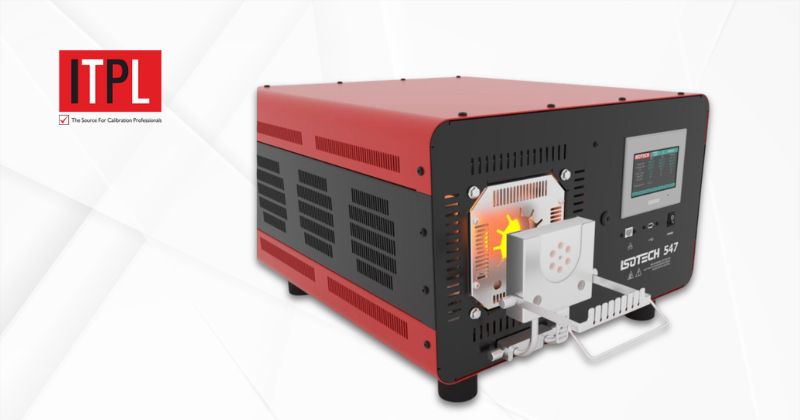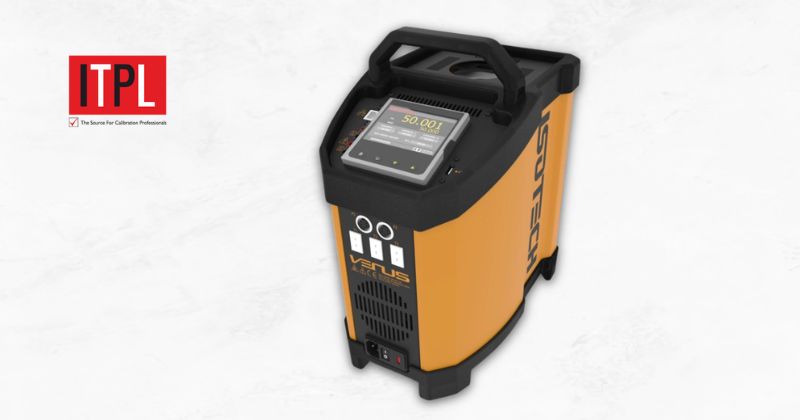
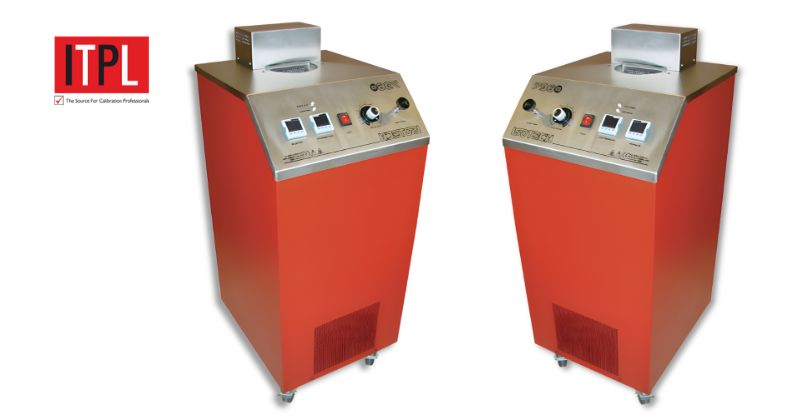
Having stable and uniform temperatures higher than the boiling point of water is a challenge in precision heating. An oil bath system is the ultimate remedy as it offers a controlled heating environment to the full range of fragile chemical syntheses and the severe stress testing of electronic parts.
Be it in the case of oil baths in laboratories to carry out research or a high-temperature oil bath to proceed with the chemical process, it is crucial to be aware of the technology behind the system. ITPL, being a leading supplier of oil bath equipment in India, the company offers high-stability solutions that are accurate and safe in hazardous situations.
What is an Oil Bath?
An oil bath is a kind of laboratory heating apparatus, in which a special fluid (typically silicone oil, or mineral oil) is used as a heating medium. Users can obtain much more uniform temperatures by immersing a reaction vessel or a reactant in the heated oil than can be attained using direct heating devices such as hot plates.
Difference Between Oil Bath and Water Bath
Although the two are used for a similar purpose, a water bath can only go up to 100 degrees C. Conversely, a laboratory oil bath can safely operate at a temperature between $200 C to $300 C (or more) with the choice of oil. This renders them the beneficial choice in distillation at high temperatures and reactions in organic chemistry.
Oil Baths in Laboratories: Purpose & Importance
Laboratory oil baths are necessary when there are long-duration processes that need the process to have minimal changes in temperature.
- Consistency in heating: The liquid media can cover the entire flask, unlike dry blocks, which do not do so, and this destroys hot spots.
- Stability: Laboratory oil baths of high quality have temperature changes within the range of 0.01 o C to 0.1 o C.
- Safety: Modern systems consist of over-temperature protection in order to avoid the oil reaching its boiling point.
Types of Oil Baths
To meet diverse industrial needs, various configurations of oil baths are available:
Laboratory Oil Baths
These are bench-top designed and usually have an oil bath heater, which is compact but full of power to be used in the lab. In R&D, a precision oil bath is normally used to repeat experiments.
Digital & Programmable Oil Bath
Digital oil bath involves the use of LED/LCDs in real-time monitoring. The programmable models can be modified to have a particular heating ramp and soak time, which is essential in material aging tests.
Constant Temperature & Thermostatic Oil Bath
Constant temperature oil baths employ PID (Proportional-Integral-Derivative) controllers in order to avoid temperature overshoot. These are the thermostatic oil bath systems that are regarded as the best in terms of calibration and stability tests.
Industrial Oil Bath
In large-scale production, an industrial oil bath has hefty construction, greater tank quantities, and enhanced heating components that allow 24/7 working.
High Temperature Oil Bath Systems for Industrial Use
Different sectors require specialized heating profiles to ensure product integrity.
High Temperature Oil Bath for Chemical Industry
Used primarily for refluxing and heating sensitive reactants. The high-temperature oil bath for chemical applications ensures that volatile substances are heated evenly to prevent hazardous decompositions.
High Temperature Oil Bath for Petrochemical Industry
In the petrochemical industry, oil baths are used for viscosity testing and determining the flash/fire points of lubricants. These systems are built to withstand corrosive environments and extreme heat.
High Temperature Oil Bath for the Electronic Industry
The electronic industry utilizes oil baths for the “burn-in” testing of semiconductors and circuit boards. A high-temperature oil bath for the electronic industry ensures that components can survive the thermal stresses they will encounter in the field.
Key Features of a Precision Oil Bath
The following are some of the technical specifications to consider when assessing a precision oil bath:
- PID Temperature Control: Maintains the bath at the specified set point.
- Energy Saving Construction: Stainless steel tanks of high grade and thick glass wool insulation to reduce heating loss.
- Safety Cut-offs: Safety thermostats that are independent to avoid overheating.
- Stirring Mechanism: Internal magnetic or overhead stirrers to maintain the temperature of the oil the same throughout the tank.
Applications of Oil Bath Equipment
- Chemical laboratory oil bath: Distillation and synthesis.
- Pharmaceutical industry oil bath: Dissolution and incubation.
- Oil bath to test material: Testing the thermal expansion of polymers and metals.
- Oil bath Research laboratory: Calibration of thermometers and sensors.
How to Choose the Right Oil Bath Equipment
- Temperature Range: Do you require $150 o C or 300 o C? Make sure that the bath and the oil are rated to the peaks of your needs.
- Capacity: Select a tank capacity that will be large enough to immerse your largest vessel without overflowing.
- Digital vs. Thermostatic: In the case of high-stakes research, the digital type of oil bath with PID control is always selected to make it more accurate.
- Local Support: In India, make sure your supplier can supply calibration certificates and spare parts.
Oil Bath Manufacturer & Supplier in India – Why Choose ITPL
Isothermal Technology Private Limited (ITPL), being a leading oil bath manufacturer and supplier in India, is the solution to the gap between international quality and local availability.
- Knowledge: We are the experts in high-stability calibration baths that are applied by NABL-accredited laboratories.
- Reliability: The equipment we manufacture is designed to fit the safety and performance standards worldwide.
- Customization: We provide petrochemical and electronic solutions that are customized for high temperatures.
Laboratory Oil Bath Price: What Affects the Cost?
When you are researching on the laboratory oil bath price, remember that many factors determine the price of the oil bath in the end:
- Control Accuracy: Improved accuracy. PID controllers are more expensive but offer greater performance.
- Safety Features: There is an addition of safety features, such as explosion-proof or secondary safety circuits.
- Quality of the Material: 304 or 316 grade stainless steel tanks are more costly but have higher longevity.
Oil Bath vs. Water Bath
| Feature | Water Bath | Oil Bath |
| Max Temperature | $100°C$ | Up to $300°C$ or more |
| Heating Speed | Fast | Slower (but holds heat longer) |
| Maintenance | Low (refill water) | High (requires oil changes/cleaning) |
| Best For | Routine incubation | High-temp chemical reactions |
FAQs on Oil Bath Equipment
Q1. What is an oil bath used for?
Ans: It is also applied in heating materials to high temperatures (more than 100 C) that are very stable and uniform.
Q2. What is the reason behind the use of oil baths in laboratories?
Ans: They eliminate the hot spots to which dry heating is connected, and it is possible to control the temperature of chemical reactions accurately.
Q3. Which temperature can a high-temperature oil bath achieve?
Ans: The typical industrial models attain temperatures of $250 C 300 C, but specialized models can extend higher.
Q4. Would a thermostatic oil bath be better than a digital oil bath?
Ans: Yes, digital models provide more model monitoring and more accurate PID control than the simple analog thermostatic dials.
Conclusion
Whether it is an elegant research or something industrial as processing and processing, the correct oil bath is the keystone of a secure and precise thermal setting. Since oil baths are used in laboratories and special high-temperature oil bath systems, there is no compromise on precision.
Want to modernize your laboratory? Check out the oil baths of high precision in Explore ITPL and make sure that your thermal applications are taken care of in a world-class manner.